
Why limits matter on this title specifically
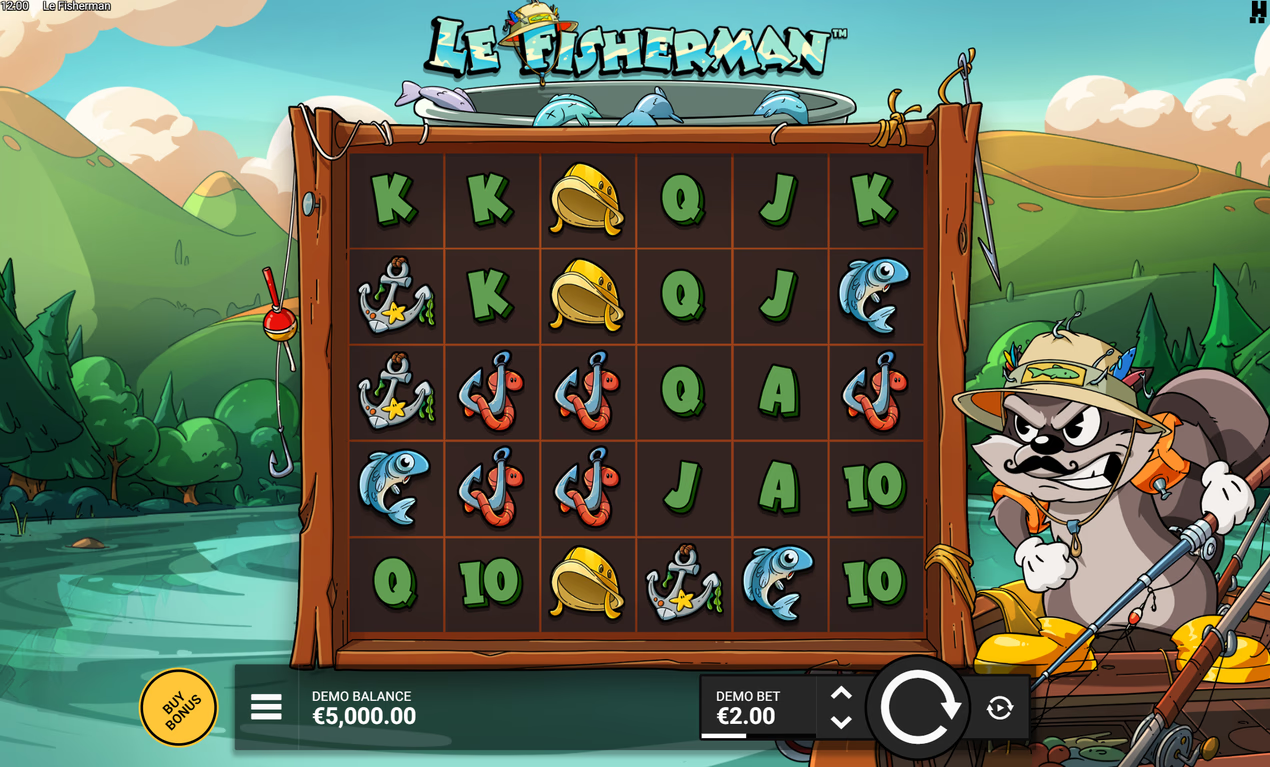
Le Fisherman runs on a 6x5 cluster-pays grid with cascading wins, a hit frequency near 42%, and a fixed max win of 15,000x stake. That combination produces long stretches of small refills punctuated by irregular spikes from the Golden Squares and Rainbow collection mechanic. Sources place the volatility band anywhere between low-medium and medium, which means the swing between a quiet base game and an active free spins round can be sharper than the label suggests. Deposit limits, loss limits, and time-based session alerts — available at licensed operators serving Canadian players — are the tools that keep that swing from turning into an unplanned spend. None of these tools change the math of the game; they change how much control the player retains while the math plays out. In Canada, gambling is restricted to 19+ in most provinces, with Alberta, Manitoba, and Quebec setting the threshold at 18+.
Setting limits around a bonus-buy title
Le Fisherman offers a FeatureSpins menu with several bonus-buy entry points, including cheaper routes into the Golden Square collection and direct access to one of the three free spins modes — On Thin Ice, Slippery When Wet, and Smokey Under Water. Bonus buys compress variance: instead of spreading risk across hundreds of base-game spins, the player commits a larger stake to a single outcome. That structure rewards a hard budget decided before the session starts, not adjusted mid-play after a near-miss on the Golden Squares.
The reported RTP for Le Fisherman is not a single figure. Configurations across sources range from 86.25% up to 96.33%, and the base rate itself is inconsistently listed as either 96.33% or 94.33% depending on the operator. This is one of the clearer arguments for checking the paytable at the actual casino before committing a deposit limit or loss limit to a session, since the configuration in play changes the underlying return regardless of how the volatility feels at the table.
Cascading wins on a 42% hit-frequency cluster game create a rhythm that can mask total spend. Small, frequent tumbles feel like progress even when the net balance is drifting down; this is precisely where a loss limit or a mandatory cool-down after a set number of spins earns its place. Reality-check pop-ups, available at most Canadian-facing operators, interrupt that rhythm at fixed intervals rather than leaving the decision to stop entirely to the player's own judgment mid-session.
The 15,000x cap means the top outcome is fixed rather than progressive — there is no jackpot pool growing in the background to chase. That ceiling is worth internalising before setting a stop-win target: a target set relative to a realistic session outcome is more sustainable than one anchored to the maximum the game can theoretically pay.
Free-play demo access, confirmed across multiple review sites, is the practical way to learn the Golden Squares and Rainbow collection behaviour without any of the above limits being tested against real funds. Reviewing the mechanic in demo mode first, then setting deposit and loss limits before switching to real stakes, is a sequence that keeps the learning curve separate from the spending curve.
Support resources — self-exclusion registries, provincial responsible gambling helplines, and operator-side cooling-off periods — apply regardless of which RTP configuration or bonus-buy option a given casino runs for this title. They sit outside the game's math entirely, which is exactly why they remain effective even where the sources on Le Fisherman's exact numbers disagree.